
One of the biggest misunderstandings around tropical fruit is that it should always arrive ready to eat.
Often, it should not.
Fruit continues to change after harvest, and many varieties develop their best texture and flavor only after spending time at room temperature.
Knowing what to look for can completely change the experience.
Ripening is part of the product
At Fruits with Seeds, we do not see ripening as an inconvenience.
It is part of the fruit.
Some varieties soften quickly. Others take longer. Some change color dramatically, while others remain relatively similar on the outside.
That is why there is no universal rule for ripening fruit.
Instead, pay attention to three things:
Firmness
Many fruits become softer as they ripen.
Aroma
A ripe fruit often develops a stronger, sweeter fragrance.
Appearance
Skin color and texture can naturally change during ripening.
Fresh Soursop
Soursop may arrive firm.
Leave it at room temperature until it begins to soften noticeably under gentle pressure.
When ripe, the white flesh should be soft, creamy and easy to scoop.
Its tropical flavor becomes much more expressive once the fruit has fully softened.
Mamey Sapote
Mamey rewards patience.
Keep it at room temperature and wait until the fruit begins to yield gently when pressed.
Once ripe, the flesh should be deep orange-red and creamy.
If it is still very firm, it probably needs more time.
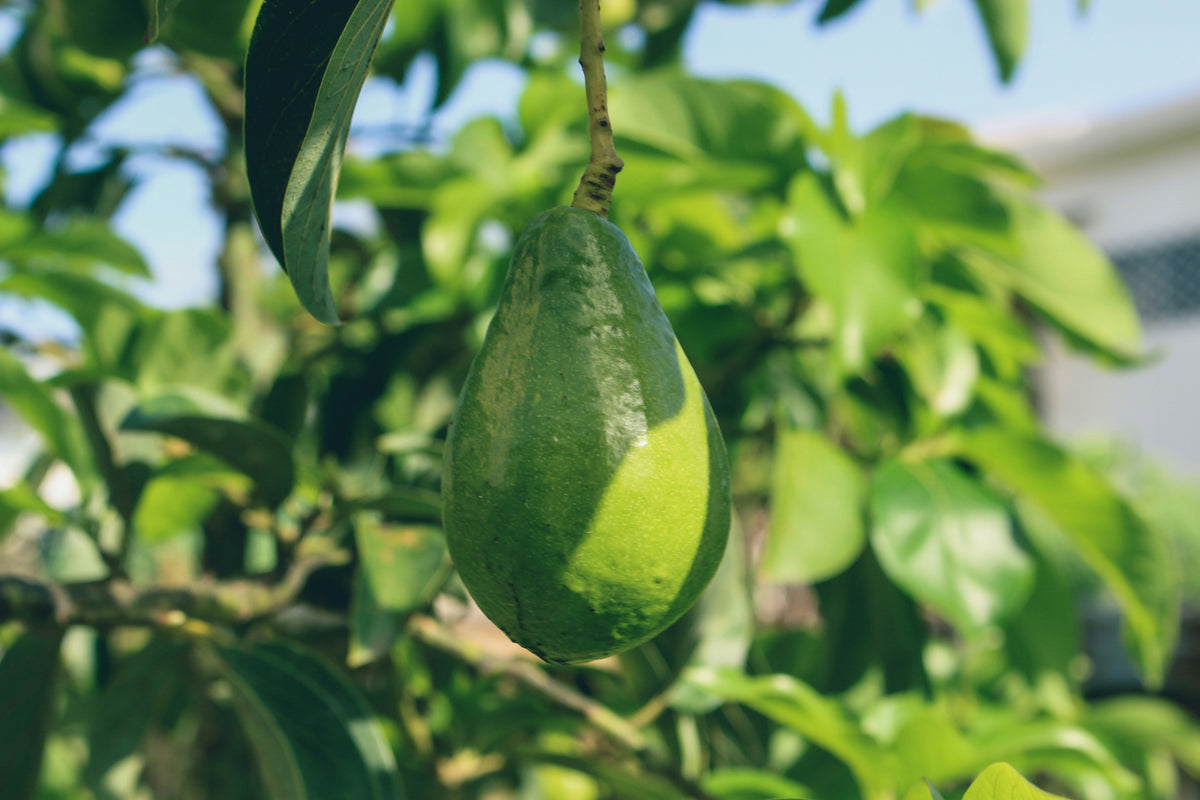
Caribbean Avocado
Caribbean avocado varieties should also be allowed to soften naturally at room temperature.
A ripe avocado should yield gently to pressure without feeling overly soft.
When ready, the flesh should be smooth, buttery and creamy.
Burro Banana
Burro bananas are naturally firmer than standard bananas.
They may arrive firm and continue ripening at room temperature.
As they mature, the skin changes and the fruit gradually softens, while still retaining more structure than a typical banana.
Their tangy-sweet flavor also develops as they ripen.
Don’t judge fruit by perfection
Natural fruit varies.
One fruit may ripen faster than another from the same box.
Shapes differ. Colors differ. Skin marks happen.
That does not necessarily mean something is wrong.
In fact, learning to recognize those differences is part of reconnecting with fruit as a natural product rather than something manufactured to look identical.
A simple rule
If your fruit arrives firm, do not rush it.
Leave it at room temperature, check it regularly and pay attention to how it changes.
The difference between eating fruit too early and eating it at the right moment can be significant.
Good fruit takes time.
Explore our Ripening Guide
Share:
Soursop: What It Is, What It Tastes Like, and How to Enjoy It
Why Mamey Sapote Is a Fruit Worth Waiting For